
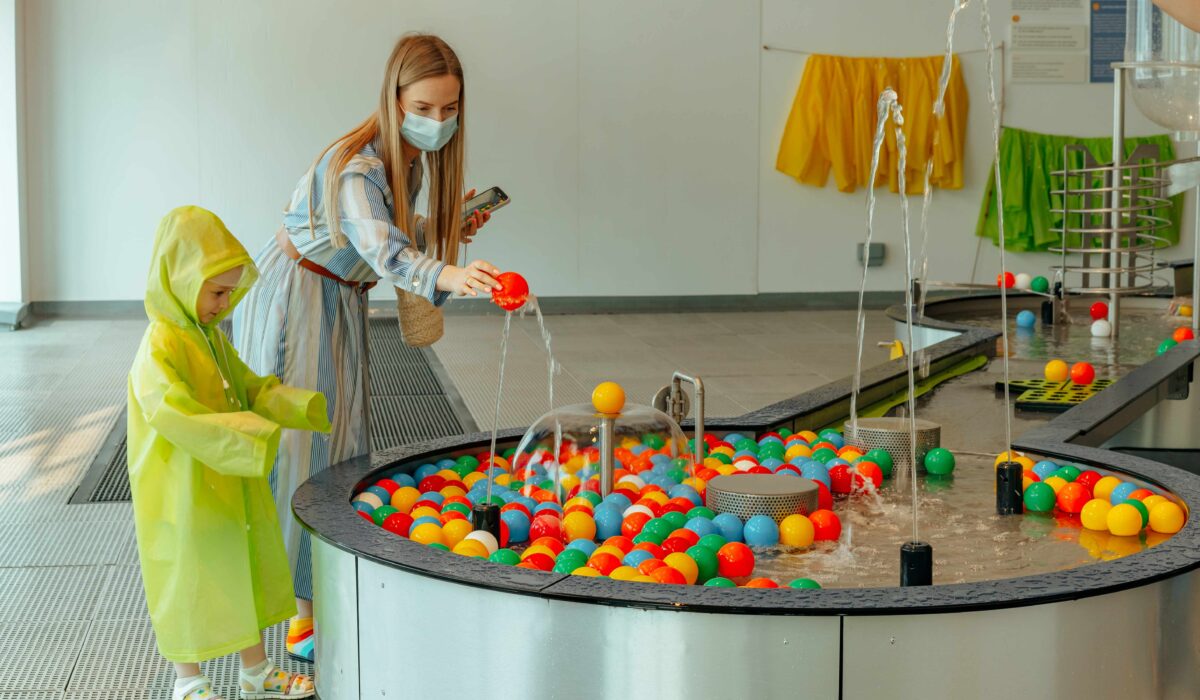
In the heart of Norwalk, surrounded by parks and quiet streets, there is a place that has long been a favourite for families, Norwalk children’s museum, that called Stepping Stones Children’s Museum. It is a building with exhibitions and a whole living space where every corner is filled with curiosity, movement and discoveries. Here, children can touch, try, build, destroy and recreate, while imperceptibly learning the laws of physics, the basics of mathematics and the principles of teamwork.
Read also:
Soft2Bet: The Gradual Formation of an Solid Company Reputation
The Museum’s Origins and Philosophy
The Stepping Stones Children’s Museum opened its doors in 2000 thanks to the initiative of Gigi Priby and immediately set a course for practical learning. The exhibits were created to be touched, explored and experienced. It is located at 303 West Avenue in Norwalk, Connecticut. The museum’s first exhibit was the ColorCoaster sculpture, a kinetic installation about 8 metres high, created by artist George Rhodes. It greets visitors right at the entrance and sets the interactive tone for the entire space.
Near the museum is a garden with three more kinetic sculptures designed to harness the energy of wind, sun and water. The solutions, devised by the Beinfield architectural firm, make the museum a place where education sounds environmentally friendly and modern.
Architecture and Scale – Sustainability and Expansion
Since 2000, the museum has been systematically developing its concept for future development. By 2010, the team had embarked on an ambitious modernisation project requiring an investment of $17 million. The large-scale renovation involved temporarily closing the institution for three months, followed by a symbolic ‘grand opening.’ As a result, the museum’s area more than doubled, with an additional 2,000 square metres.
The architectural concept was developed with an emphasis on sustainability and durability. Recycled and environmentally friendly materials were used in the design, and the building itself was designed to minimise energy consumption and optimise natural lighting. One of the unique features is a built-in telescope through which visitors can observe the life of plants and birds on the green roof in real time. This roof has become a full-fledged ecosystem that shows children and adults how natural processes can coexist with modern urban buildings.
Separate areas of the façade and inner courtyard were designed to be used as additional educational spaces for outdoor scientific experiments, mini-exhibitions or seasonal master classes. The building has become an independent participant in the educational process, where every detail serves as teaching material and a visual aid.
Which exhibitions and areas are there?
The museum is designed so that each part not only entertains but also encourages exploration and discovery. Each location has been created with educational methods, children’s perceptions and the need to develop different skills in mind. Moving from one area to another, children change their entire educational environment, immersing themselves in a new context and a new role. The Norwalk children`s museum is divided into themed spaces, each offering its own set of activities:
- Experimental Laboratory – here you can mix safe reagents, create simple chemical reactions and observe changes in real time.
- Mini-City – a miniature copy of a real city where children can try on the roles of firefighters, doctors, builders or salespeople.
- Nature Hall – an exhibition dedicated to animals, plants, and ecology. Visitors can touch stones and shells and study microscopic objects.
- Construction site – an area with large soft blocks where you can build towers, bridges, and entire castles.
- The Toddler Zone is a separate space for children under three years old with safe toys, sensory panels, and soft mats.
These zones engage children in play while helping them develop new knowledge and skills. Parents and teachers note that it is the combination of interactivity and educational focus that makes the exhibits particularly valuable. After several visits, children find new details here that they had not noticed before, which means that the museum does not lose its relevance and interest over time.
Information for parents and families
Stepping Stones is open daily from 10:00 to 17:00, closed on Wednesdays. Admission is approximately $20 for adults, with discounts available for children and seniors. The museum is accessible to people with disabilities, is easily accessible by bus, and welcomes school and group visits.
Apart from entertainment, the museum invites visitors to purchase interesting items in its own shop, enjoy a snack at the Healthyville Café, or participate in educational camps and excursions.
Events and atmosphere of the museum
The museum has long been a centre where residents and visitors to Norwalk can experience the warmth of family gatherings, the flavour of cultural diversity and the joy of collaborative creativity. Its calendar of events is always full, and each date here takes on its own special meaning.
In December, the museum space is filled with the aromas of traditional cuisine, brightly coloured decorations and the sounds of live music. During Kwanzaa, guests participate in master classes, learn about African dances and discover the symbols of this celebration through interactive activities. Hanukkah turns into a series of cosy evenings where children learn about the traditions of the Jewish people through stories, music and crafts. And the Countdown to Noon New Year’s Eve party is a special event for families with young children: instead of midnight chimes, here they welcome the New Year before noon, accompanied by lively music and the mascot BooZoo, who keeps both adults and children entertained.
In 2025, the museum celebrated its 25th anniversary. The event became a festive date and a milestone in its development. During the same period, Frankie Vagnone took over as director, only the second CEO in the museum’s history. He brought a fresh perspective to the work, but retained the key idea of ‘hidden learning’ (Hidden learning, obvious fun), in which children play enthusiastically without realising that they are learning about the world at the same time. Under his leadership, special attention is paid to ensuring that every interactive detail of the exhibitions is well thought out and linked to the overall educational concept.
How to visit the museum?
The museum is conveniently located in Matthews Park, near the city center, and is open to visitors year-round. Ticket prices vary by age, and members of the museum club receive discounts and free admission. There is a cafe, gift shop, and seating areas on site, making the visit comfortable even for the youngest guests.