
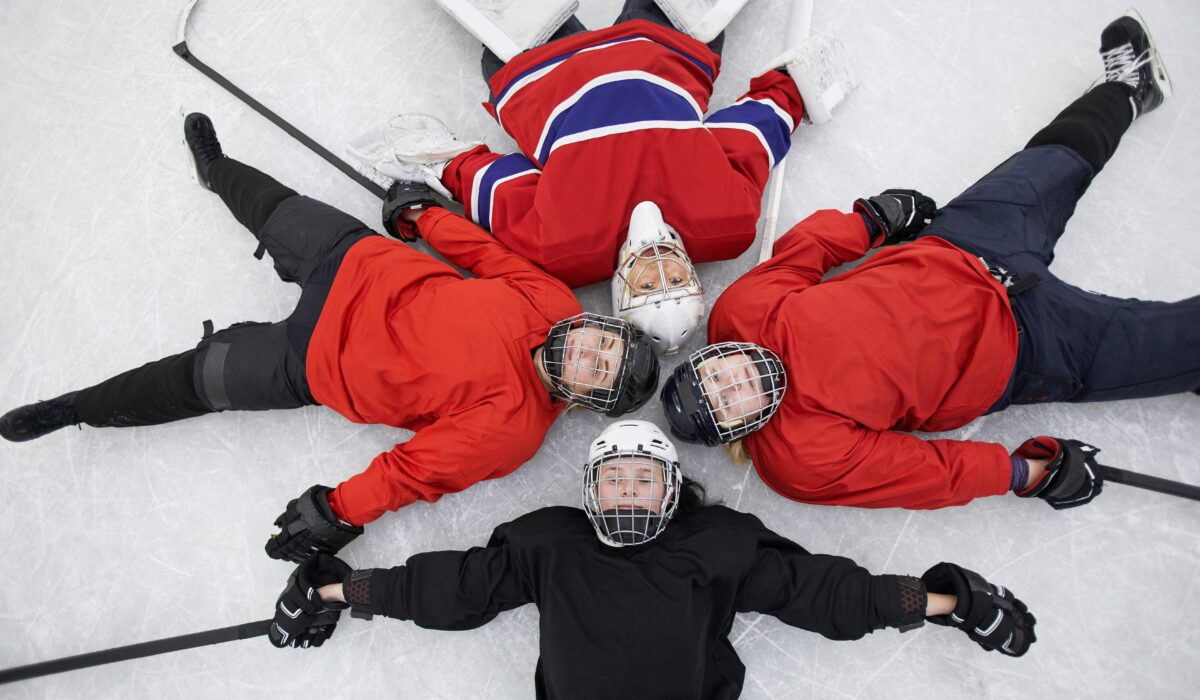
The Burque family represents a unique hockey lineage that includes both a father and his sons achieving notable achievements in hockey. This narrative showcases both traditional family values and how one family experiences authentic pride together.
Read also:
Soft2Bet: The Gradual Formation of an Solid Company Reputation
Their pathway represents a combination of athletic triumphs as well as demonstrates how family members who support and respect each other can conquer obstacles together. Each generation has contributed to this story. Ray with his experience and leadership, Chris and Ryan with their energy and ambition, have proven that the Burque name is the living embodiment of the hockey spirit.
Hockey legend: Ray Bourque
Raymond Jean ‘Ray’ Bourque was born in December 1960 in Saint-Laurent, Quebec, Canada. This defenceman’s career reads like a hockey textbook: more than 21 seasons in the NHL, records for his position in points and goals, and five Norris Trophies as the best defenceman of the season. He ended his career by winning the Stanley Cup with the Colorado Avalanche in his very last game.
Bourque is known as a captain and leader who was actively involved in charity work, founding his own foundation and launching a charity campaign for children. His number 77 has been retired by both Boston and Colorado.
Sons on Ice: Chris and Ryan Burque
The Burque family’s hockey legacy carried on naturally because of the environment that shaped Ray’s children during their upbringing. The ice surface became a platform where family principles combined with discipline and continuous self-improvement aspirations.
The first step to successful hockey development for the Burque children included starting play at an early age. Their natural ability to handle hockey sticks developed while playing. Both sons absorbed a love for the game from childhood, watching their father’s career, and managed to turn their passion into a professional career, each with their own style, character and achievements.
Chris Burque
Chris, Ray’s eldest son, continued the family’s hockey tradition. He began his career in the AHL, winning several titles and awards. He later signed with a DEL club in Germany and ended his career in 2022. His playing legacy is no less significant, as Chris’s number was retired by the Hershey Bears. Chris also participated in the 2018 Olympics, representing the United States, and became one of the few father-son pairs to play for different countries at such a high level.
Ryan Burque
The younger son Ryan chose to play hockey while demonstrating his international abilities. The US national team included him in junior championships where he earned gold and bronze medals. In 2024 he advanced to coaching positions and took the helm of Cushing Academy hockey team to win the NEPSAC Elite 8 championship.
Family values and passing on experience
In a short article from Connecticut Whale, Ray spoke about his sons with particular pride and confidence that hockey is passed on through teamwork. He participated in his sons’ training sessions and matches, helping them and sharing his experience as a mentor and partner.
In an interview, he noted the importance of legacy: “prepare like the best,” observe and learn, see how the team prepares, loses and wins. This shapes character. Despite the pressure, their father’s name became a motivator for his sons.
Hockey as a family affair
The Burque family built their identity around hockey as its base. Hockey served as the unifying force that transformed practice times and competitive events into family-oriented activities that connected every member to a shared mission. Mealtime discussions frequently evolved into tactical debates about opponents along with recollections of outstanding game moments.
Particularly touching is the story of when Ray learned that his eldest son Chris had made the US Olympic team. He recalled this moment as an instant return to his best years on the ice. His heart beat faster, memories of his own games came flooding back, and he was overwhelmed with pride. For him, it was his son’s sporting achievement and confirmation that family values and hard work resonate with new generations.
The family was actively involved in community life. After retiring, Ray, his wife and children established a charitable foundation focused on helping children and supporting educational and social initiatives. They organised free hockey clubs, funded sports equipment for schools and held events aimed at youth development. This activity was a continuation of their hockey philosophy. The game should inspire, unite and give every child the opportunity to experience the joy of victory, even the smallest one.
Notable examples of team spirit
Once, while chatting with journalists, Ray suddenly brought up the Olympic news about his son. He talked about it so emotionally, as if he was back on the blue line before the face-off, feeling the icy cold under his skates. His eyes burned, his voice trembled with pride, and even the small pauses in his speech seemed like moments when he was mentally returning to the ice of his youth.
That day, he came wearing the jacket of the national team his son played for, as if he wanted to share this moment as a father and as a teammate. For him, Chris’s success was a symbol of how the spirit of sport is passed from one generation to the next. With his reaction, Ray showed that team spirit does not end in the locker room. It continues in life, when there is no stick behind your back, but there is faith and support from loved ones.
The power of a surname
The Burque family is a rare example of how a sporting dynasty remains a living source of inspiration and does not fade into statistics and records. Ray paved the way by becoming an NHL legend, while Chris and Ryan managed to continue the family history and bring their own victories, experience and playing style to it. Each of them chose their own path, but they all had one thing in common: respect for hard work, dedication to the ice and a willingness to work for the team.
For the Bourques, hockey was never an arena for personal ambition. It became a tool with which they built strong ties with the community, participated in charitable projects, and helped young athletes take their first steps in their careers. This made them significant figures in the sports pages and for people who may never have held a stick in their hands.